School-Parent Communication: A Complete Guide for Schools

What is school communication?
Great schools do more than deliver excellent education. They build lasting relationships with families, and those relationships begin with effective communication.
When parents know what's happening at school, they can better support their children's learning, respond quickly to important updates, and stay actively involved in their educational journey. For schools, consistent communication builds trust, strengthens the school community, and creates better experiences for students and families alike.
Today, communication extends far beyond newsletters and printed notices. Schools need faster, more organized ways to connect with parents while keeping conversations secure and easy to manage. That's why many schools are replacing scattered communication channels with dedicated school communication platforms that bring everything together in one place.
Research highlights just how important this is. According to Gallup, 94% of parents are more likely to recommend a school that communicates with them regularly. Strong communication doesn't just improve relationships. It also strengthens a school's reputation, increases parent satisfaction, and helps attract new families.
Yet many schools still rely on multiple disconnected tools such as email, WhatsApp groups, text messages, and phone calls. Managing communication across different platforms often leads to missed messages, delayed responses, and unnecessary administrative work.
A centralized school communication platform helps schools streamline communication, increase parent engagement, and ensure every family stays informed.
Why parent-school communication matters
Parents play a critical role in every student's success. Once children enter school, that success depends on a strong partnership between home and school.
Open, consistent communication allows parents and educators to work toward the same goals. Parents gain a clearer understanding of their child's academic progress, while teachers receive valuable insights into each student's strengths, learning style, and individual needs.
When schools prioritize communication, everyone benefits.
Some of the biggest advantages include:
- Higher parent engagement.
- Stronger trust between schools and families.
- Faster responses to important updates.
- Better collaboration between teachers and parents.
- More personalized support for students.
- A stronger sense of community across the school.
Schools that invest in better communication create an environment where parents feel informed, involved, and confident that their voices matter.
This is one of the main reasons why many schools are moving away from general messaging apps and adopting dedicated school communication platforms built specifically for education.
How effective school communication improves student success
Strong communication doesn't just benefit parents. It has a direct impact on student learning and wellbeing.
When schools and families communicate consistently, they can identify challenges earlier, celebrate achievements more often, and provide students with the support they need to succeed.
Keeping parents informed about academic progress
Parents can only support learning at home when they know how their children are doing at school.
Regular updates help families understand academic performance, identify areas where additional support may be needed, and celebrate progress along the way.
Modern school communication platforms make this even more effective by allowing schools to send personalized updates instead of one-size-fits-all announcements.
Encouraging greater parent engagement
The easier it is for parents to communicate with the school, the more likely they are to participate.
Whether it's responding to school requests, attending events, or staying informed about classroom activities, accessible communication encourages parents to become active partners in their children's education.
Research consistently shows that students perform better when families are engaged in their learning.
Understanding every student's needs
Parents know their children better than anyone else.
Regular conversations, surveys, and feedback give schools valuable insights into each student's personality, interests, strengths, and challenges.
This information helps teachers personalize learning experiences and provide support where it's needed most.
Addressing challenges before they grow
Small concerns can quickly become larger problems when communication is delayed.
Consistent communication allows teachers and parents to identify academic or behavioral issues early, discuss possible solutions, and work together before those challenges affect student performance.
Why traditional school communication falls short
Most schools don't struggle because they communicate too little.
They struggle because communication is spread across too many different channels.
Important announcements end up buried in email inboxes. WhatsApp groups become difficult to manage. Text messages provide little context. Parents aren't always sure where to look, and school staff spend valuable time following up instead of focusing on students.
Here are some of the biggest challenges schools face.
WhatsApp groups
WhatsApp is one of the world's most popular messaging apps, and for good reason. It's fast, familiar, and incredibly easy to use.
However, it wasn't designed to manage communication within a school community.
Schools need privacy controls, user permissions, targeted messaging, delivery tracking, and centralized oversight. General messaging apps simply don't offer the level of organization schools require.
Email works well for formal communication, but important updates are often overlooked, especially when parents receive dozens of emails every day.
SMS
Text messages are useful for urgent notifications, but they offer limited interaction and provide little context beyond a short message.
Too many communication channels
When schools rely on email, SMS, WhatsApp, printed notices, and phone calls at the same time, communication becomes fragmented.
Parents may miss important information, while school staff have no clear way to track conversations or measure engagement.
Generic communication
Sending the same message to every parent often leads to lower engagement.
Families are far more likely to respond when communication is relevant, personalized, and directly related to their child.
Modern school communication platforms solve these challenges by centralizing communication, personalizing messages, and giving schools complete visibility into parent engagement.
Best practices for effective school communication
Effective school communication is built on consistency, clarity, and trust. It's not just about sharing information. It's about creating meaningful conversations that keep parents engaged and strengthen the partnership between home and school.
Here are some practical strategies schools can use to improve communication with families.
For teachers
Communicate consistently
Parents shouldn't only hear from teachers when there's a problem.
Regular updates about classroom activities, student progress, and upcoming events help build trust and create stronger relationships over time. Even a quick positive message can reassure parents that they're connected to what's happening in the classroom.
Consistency also encourages parents to stay engaged throughout the school year instead of only responding during important milestones.
Celebrate student achievements
Communication shouldn't focus solely on reminders, concerns, or disciplinary issues.
Sharing classroom successes, student accomplishments, and memorable moments creates a more positive relationship between families and the school.
When parents see their children recognized for their efforts, they become more engaged, more supportive, and more likely to interact with future school communications.
Make communication simple
Parents are busy, and long messages are often ignored.
Keep updates concise, easy to understand, and action-oriented. When parents immediately know what information is important and what action, if any, is required, they're much more likely to respond.
Features like actionable messages make this process even easier by allowing parents to complete tasks directly from the message itself.
For parents
Stay connected to school updates
The more informed parents are, the better they can support their children's education.
Checking school announcements regularly helps families stay up to date with classroom activities, upcoming events, important deadlines, and school news.
Instead of searching through emails, text messages, or multiple apps, parents benefit from having everything organized in one place.
Reach out when support is needed
Strong communication works both ways.
Parents should feel comfortable contacting teachers whenever they have questions about academic progress, wellbeing, or classroom expectations.
Open conversations help resolve concerns quickly and strengthen the partnership between home and school.
Respond promptly to school requests
Whether it's approving a field trip, confirming attendance, or acknowledging an important announcement, timely responses help schools operate more efficiently.
The easier schools make these interactions, the more likely parents are to respond quickly.
For school leaders
Use one communication platform across the school
Many schools rely on a combination of emails, messaging apps, phone calls, and printed notices.
While each tool serves a purpose, managing multiple communication channels often creates confusion for both staff and parents.
Using a single school communication platform gives administrators complete visibility into school-wide communication while making it easier for families to find the information they need.
Personalize communication whenever possible
Not every message is relevant to every family.
Sending targeted communication based on grade level, class, student, or group makes messages more meaningful and significantly improves engagement.
Parents are much more likely to read and respond to messages that directly relate to their child.
Give parents a window into school life
Parents want to feel connected to their children's daily experiences.
Sharing classroom highlights, school events, student achievements, and special activities helps families stay involved even when they can't be physically present.
This type of communication also creates more opportunities for meaningful conversations at home.
Listen as much as you communicate
Effective communication isn't just about sending information.
Schools should also create opportunities for parents to share feedback, ask questions, and express concerns.
Surveys, feedback requests, and regular check-ins help schools better understand parent expectations while demonstrating that every family's voice matters.
For students
Take part in parent-teacher-student conversations
When students join the conversation about their own progress, feedback stops being something that happens over their heads. Older students in particular benefit from hearing the same message their parents and teachers hear.
Keep track of school updates and resources
Students who can find assignments, resources, and announcements in one predictable place rely less on reminders at home, which removes a common source of friction between school and family.
How Schoolvoice improves parent-school communication
Great communication isn't about sending more messages. It's about making every interaction clearer, faster, and more meaningful.
Schoolvoice was built specifically for schools, giving administrators, teachers, and parents a single platform for managing everyday communication without the limitations of email, SMS, or general messaging apps.
By bringing communication into one secure, organized environment, schools can improve parent engagement, reduce administrative workload, and create stronger connections with every family.
Turn messages into action
One of the biggest challenges schools face is getting timely responses from parents.
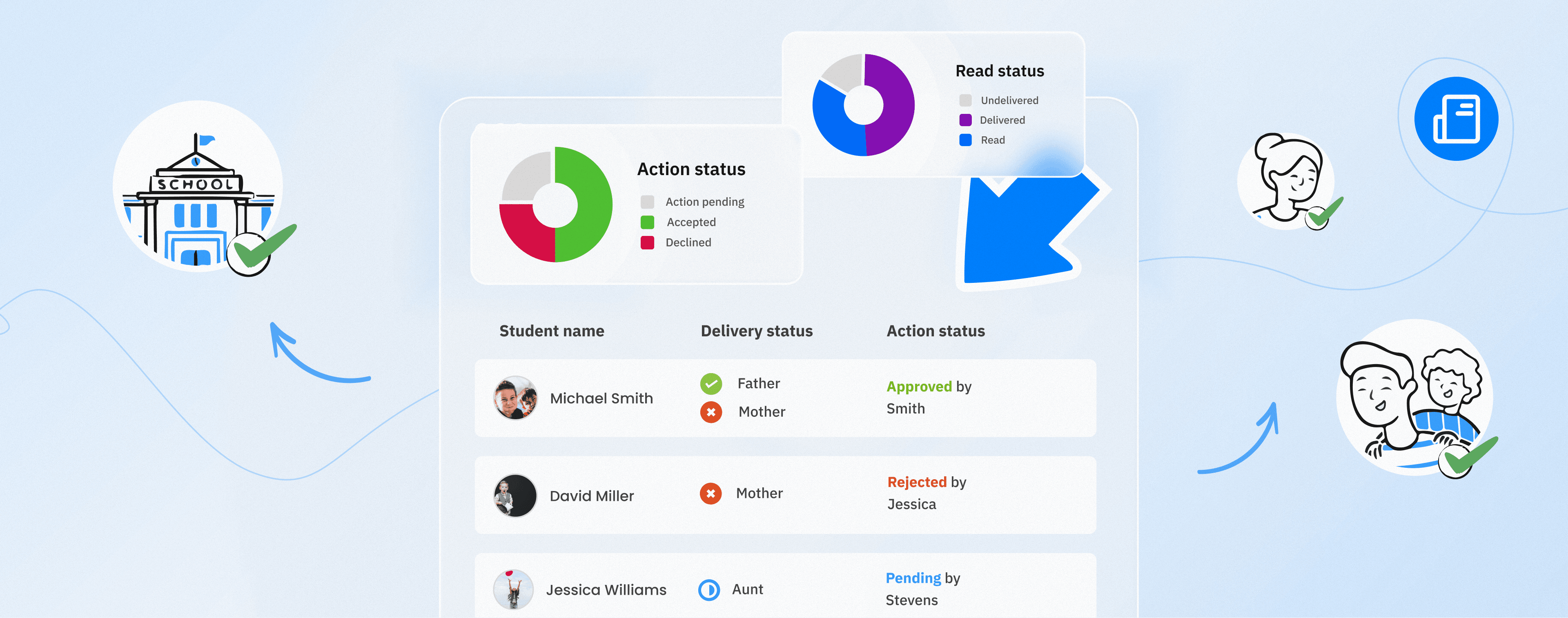
Schoolvoice solves this with Actionable Messages, allowing parents to complete tasks directly from the message itself. Whether they need to approve a field trip, acknowledge an announcement, respond to a request, or make a payment, everything happens with just one tap.
Instead of chasing responses through multiple channels, schools receive faster feedback while parents enjoy a simpler experience.
Keep teacher-parent conversations secure
Parents and teachers need an easy way to communicate, but they also need clear boundaries and privacy.
Schoolvoice provides secure one-to-one Chat without requiring teachers or parents to share personal phone numbers. Conversations remain organized, searchable, and connected to the school environment, giving everyone peace of mind.
Teachers can also manage their availability, helping create healthier communication while ensuring parents always know the best way to reach them.
Help parents stay connected to everyday school life
Parents want more than announcements. They want to see what's happening throughout the school day.
With School Stories and Live Broadcast, schools can share classroom activities, celebrations, events, and memorable moments as they happen.
Giving families a window into daily school life strengthens relationships, encourages meaningful conversations at home, and keeps parents engaged beyond administrative updates.
Encourage positive student engagement
Recognition is a powerful motivator.
Challenges helps schools create interactive challenges that encourage participation, celebrate achievements, and motivate students throughout the year.
Parents can follow their children's progress, celebrate milestones together, and become more involved in supporting learning outside the classroom.
Make learning resources easy to access
Parents shouldn't have to search through email attachments or messaging apps to find classroom resources.
With Teachers Drive, teachers can organize and share learning materials, worksheets, presentations, and classroom documents in one central location.
Everything stays organized, accessible, and easy to find whenever families need it.
Build stronger connections with every family
Great school communication creates stronger partnerships, increases parent engagement, and helps students succeed.
If your school is looking for a smarter way to communicate with families, Schoolvoice brings everything together in one secure platform, making it easier to keep parents informed, engaged, and connected throughout the school year.
Book a personalized demo today and discover how Schoolvoice can transform communication at your school.