How school reports help school leaders make data-driven decisions
Every day, school leaders make decisions that shape the quality of education, the student experience, parent communication, and school operations. These decisions often draw on professional experience and staff observations, but in a fast-changing educational environment, data has become just as important in helping leaders see the full picture and make better decisions.
Today, schools handle vast amounts of data, from attendance and test results to parent engagement and student participation in activities and programs. But having this data in school systems and records doesn't necessarily mean it's being used effectively. Its real value comes from analyzing it, connecting information from different sources, and turning it into clear insights that support planning and better decision-making.
So how can schools make the most of this data? And how can school reports help leaders turn numbers and indicators into meaningful insights they can actually use?
Why does data matter in school management?
Data has always been part of school operations, but its real value lies in what leaders can do with it. The challenge is collecting, analyzing, and presenting data in a way that reveals what's actually happening and supports better decisions.
With advances in technology and the growing use of educational dashboards, school leaders can track key indicators, compare results over time, and quickly spot changes that need attention. This gives them a clearer view of school performance, helping them respond to challenges, plan effectively, and make decisions based on real data. Instead of simply sitting in school systems, that data becomes a practical tool for better school management.
What challenges do schools face when making decisions without data?
Experience is essential to school management, but it doesn't always show the full picture. A problem may seem obvious at first, while data can reveal completely different causes.
For example, a school might notice low parent participation in events and assume the activities themselves are the problem. But communication data may tell a different story: poor message delivery, low read rates, or messages being sent at the wrong time.
For school leaders, this means less guesswork and more clarity. School data and reports help them identify the real causes, set the right priorities, and make informed decisions based on evidence rather than assumptions.
What are school dashboards?
School dashboards are digital tools that bring key indicators together in a visual format, helping school leaders monitor performance and understand data quickly. Reports provide more detailed data that can be reviewed, analyzed, and compared.
School dashboards can track:
- Academic performance
- Attendance and absence
- Parent engagement
- School activities
Together, dashboards and reports help school leaders move beyond looking at individual numbers and start identifying the patterns and trends that can guide better decisions.
How do school reports help leaders make better decisions?
Relying on personal impressions alone makes it harder to see the full picture. School reports give school leaders a clearer view of what's happening across the school.
1. A complete view of school performance
Reports help leaders monitor key areas, including:
- Student academic performance
- Teaching effectiveness
- Teacher and administrator performance
- Parent engagement
- Administrative and operational efficiency
Bringing these areas together gives leaders a fuller picture of school performance and helps them identify where attention or improvement may be needed.
2. Spotting problems early
One of the key benefits of school reports is that they can flag problems early, before they develop into more serious challenges.
For example, if reports show absence rates rising during a particular period, school leaders can identify the trend early, investigate the reasons behind it, and take action before it affects academic performance or the wider school environment.
Regularly reviewing data also helps schools step in sooner and address challenges more effectively.
3. Supporting strategic planning and decision-making
Schools need clear, data-informed plans for each year and term. Without reliable data, it becomes harder to plan effectively and allocate resources where they're needed most.
Reports help schools:
- Assess student outcomes and identify strengths and areas for improvement
- Measure the success of school activities and programs
- Set priorities for the new school year
- Allocate human and financial resources more efficiently
- Develop plans for continuous improvement
4. Measuring the effectiveness of parent communication
Effective parent communication builds trust, encourages engagement, and supports a better student experience. But its success isn't measured by the number of messages sent. It depends on whether parents receive, read, and respond to them.
Reports help schools answer the questions that matter: Are messages reaching parents? What percentage are being read? How often do parents respond to messages and forms? And how effective are the school's current communication channels?
By tracking delivery, read, and response rates, school leaders can spot strengths and gaps and improve communication based on data rather than assumptions.
What are the key types of school reports?
Schools use different types of reports to monitor performance and make data-driven decisions. The reports each school relies on will vary based on its goals and needs, but several common types help leaders track different areas of school performance.
Report type | What it helps schools track |
Academic performance reports | Student achievement and academic progress |
Attendance reports | Attendance, absence, and lateness trends |
School communication reports | Message delivery, parent engagement, and response rates |
Activities and events reports | Participation in school activities and events |
Administrative and operational reports | Key indicators related to school operations and efficiency |
How does Schoolvoice turn parent engagement into measurable data?
Schools handle countless messages, responses, approvals, and other parent interactions every day. When this information is spread across different channels, it's easy to lose track of it, especially when it comes time to evaluate communication or make decisions.
With Actionable Messages in Schoolvoice, schools can turn parent responses into measurable data that's easy to track, review, and use when evaluating communication and planning next steps.
Actionable Messages include:
- Announcements and updates
- Approval requests
- Read acknowledgment requests
- Reply and document submission requests
- Absence and tardiness notifications
- Emergency alerts
- School moments messages
- Payment requests
Parent responses are reflected in clear reports, giving school leaders an easy way to monitor engagement and review results without manually searching through messages and conversations.
What data can school leaders track with Schoolvoice reports?
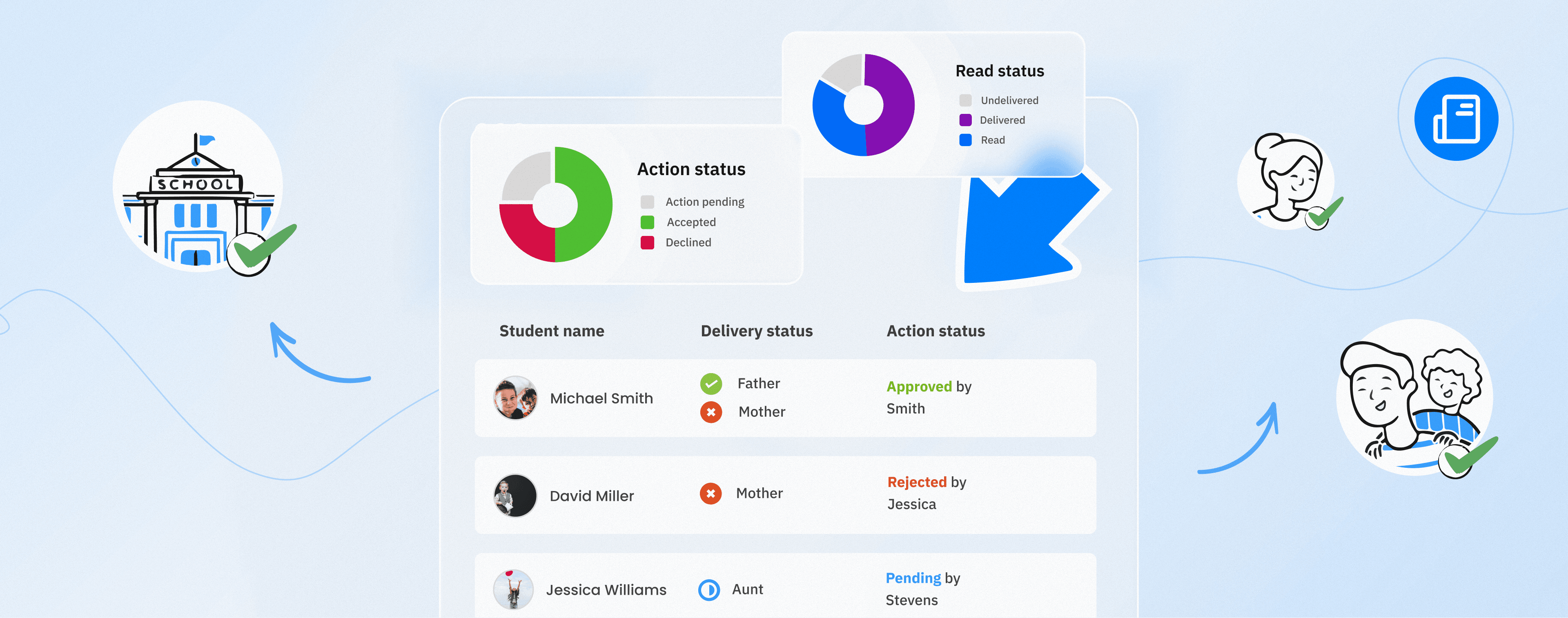
Schoolvoice reports provide school leaders with a unified dashboard for monitoring communication performance and understanding how parents are engaging with school messages.
Schools can track:
- The number of parents who received messages
- The number of parents who interacted with messages
- Response rates for each message
- Approvals for activities and trips
- Absence and tardiness records, including submitted excuses
- Payment and school fee status
- Student participation in school challenges
Instead of pulling data manually from multiple sources, school leaders can find key indicators in one place, making it easier to monitor engagement, analyze results, and act on what the data shows.
Conclusion
When school leaders have a clear view of their data, it's easier to identify what needs improvement and make decisions grounded in what's actually happening. School reports go beyond the numbers themselves. They help school leaders understand what's happening, track changes, and identify what needs attention.
With Schoolvoice reports and Actionable Messages, schools can move beyond simply sending messages to tracking communication outcomes, measuring parent engagement, and using those insights to make better decisions.
Discover how Schoolvoice reports can help your school turn parent engagement into measurable data and clearer insights. Book a demo with a Schoolvoice communication expert today.