Back-to-School Checklist for School Leaders

Back-to-school starts well before students walk into their classrooms.
In the weeks before the first day, school leadership makes a set of decisions that look routine but determine the quality of parent communication for the whole year. Is family contact data current? Who is allowed to send messages? Which channel is the school's official one? And has the emergency communication plan actually been tested?
Then, during the first fortnight, families form their impression of how the school works. Does information arrive clearly and in time? Do they know who to contact? Do they get a reply within a reasonable window?
Staff, meanwhile, work out very quickly whether the school's systems will help them do their job, or whether they will spend the year chasing responses, correcting contact details, and answering the same question across several channels.
So preparing for the year is not a list of administrative tasks. It is the opportunity to settle how communication works, name who owns it, and fix problems before families see them.
This checklist gives school leaders and admin teams practical steps, ordered by when the work has to happen: what to complete before day one, what to get right in week one, and what to watch through the first month.
It also covers three management decisions that should not be deferred, and four mistakes that recur in schools year after year.
In this article
- What to sort before the first day
- What to get right in week one
- What to watch through the first month
- Three decisions to settle, not just tasks to tick
- Four mistakes that recur at the start of every year
- A checklist to mark green, amber or red
- Where school communication fits in all of it
Before the first day
Every problem solved before term starts is easier and cheaper than the same problem three weeks in, when its effects are showing in front of families and staff.
Verify your parent contact data
Families move house, phone numbers change, and the person responsible for drop-off and collection may be different from last year.
So the fact that contact data was correct in June does not mean it is still correct when the new year begins.
The number that matters is not how many phone numbers or email addresses sit in the database. It is the percentage of students whose family the school can actually reach through at least one guardian.
Check that percentage before term starts. Do not wait for the first urgent situation to discover that some of the data is out of date.
Remove access for staff who have left
Departed staff should lose access to every platform and system before the first day, and new staff should get their own accounts with permissions that match their responsibilities.
No new staff member should start the year using a colleague's account or borrowed permissions simply to speed things up.
The larger risk is a former staff member still holding parent contact details or message history on a personal phone after they leave.
The school remains responsible for protecting that data, even when it sits on a device the school does not own.
Republish the parent handbook
If your regulator requires a parent handbook, it is usually an annual obligation rather than a document published once and left to stand for years.
It gets missed precisely because it was done well last year.
Review it, update the policies, dates, contact details and named staff, then publish the current year's version before students arrive.
Abu Dhabi schools have specific parent engagement requirements. Our ADEK Parent Engagement Policy compliance checklist sets out which documents have to be updated and reissued at the start of each year.
Reissue the parent-school agreement
Where a signed parent-school agreement is required, families re-enrolling may need to sign again for the new year.
Do not assume every family has completed it. Track the actual signatures, and keep a clear list of who has signed and who has not.
The gap usually only surfaces when the school needs to refer back to the agreement because of a specific situation or dispute.
Publish the school calendar early
Gather term dates, holidays, exam windows, events and important meetings into one calendar, and publish it as soon as the dates are confirmed.
Every date announced late produces more calls, messages and individual questions that your office has to answer one at a time.
Publishing it once at the start is not enough. Update it in the same place whenever something changes, so families always know where the current version lives.
The first week
The goal in week one is simple: families know what to expect, and staff know how to act without improvising.
Send one clear welcome message
One message carrying the essentials is more effective than five separate messages, each from a different department.
Parents do not organise their inbox by your org chart, and they should not have to assemble one instruction from several notices.
A welcome message should make clear:
- When term starts
- What the family needs to do
- The official communication channels
- Who handles which kind of question
- Any dates or forms that need action from a parent
Make it a reference families can return to, not a seasonal greeting.
State your response times in writing
Tell families clearly when staff are available, how long a reply normally takes, and what to do in an urgent situation.
Many complaints about school communication are not about the content of the reply. They are about not knowing whether anyone will reply, or when.
When a family knows routine questions are answered within a working day, and that urgent matters have a separate route, expectations become realistic and pressure on teachers drops.
In some markets stating response times is a regulatory requirement. Even where it is not, it is one of the simplest things a school can do to prevent misunderstanding.
Set new families up properly
New families do not yet know how things work inside your school, or which channels the office actually uses.
Do not just send a link to the app or portal. Help the family complete activation, then confirm they can receive messages and notifications.
A family whose name appears in the system but who receives nothing is, in practice, outside your communication entirely.
Setting up new families should cover:
- The official communication channel
- How to report an absence
- How to submit requests and approvals
- Who to contact for which question
- What to do in an urgent situation
Test your emergency communication channel
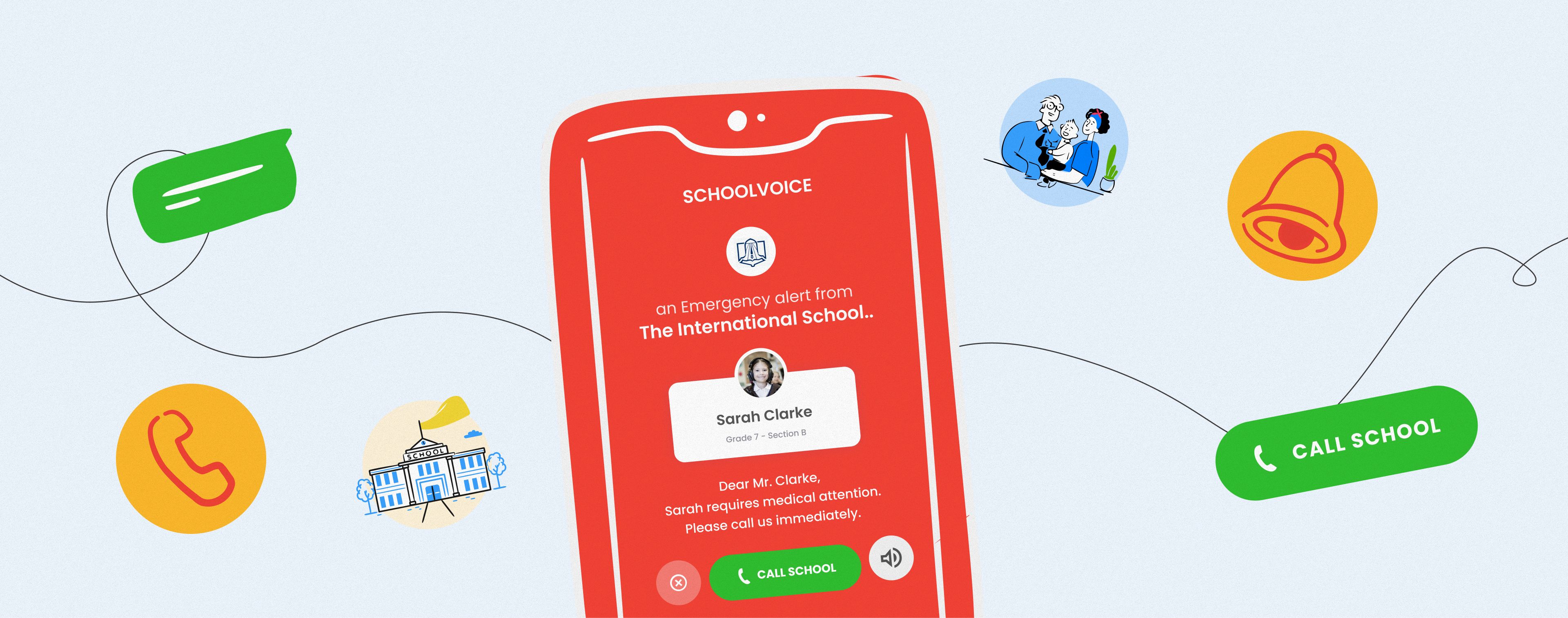
Having an emergency plan does not mean the communication channel will work when you need it.
So do not just review the plan or confirm that names and numbers exist in a file. Send a test message through the channel the school would genuinely use in an emergency, then look at the results.
Ask:
- How many families received it?
- How long did delivery take?
- What percentage did not receive it?
- Can those families be reached through a fallback channel?
- Can your team produce a clear report of the results?
The real question is not whether the school has an emergency channel. It is whether the school can reach most families within minutes.
Our guide to school emergency communication covers what an official channel needs to deliver when a school is genuinely under pressure.
The first month
Once the first days settle, patterns worth watching start to appear. Dealing with them early is easier than waiting for them to become permanent problems.
Watch attendance patterns, not just total absences
A student may be present most days but late repeatedly. Another may be absent on the same weekday every week, or after every short holiday.
None of that shows up in a total absence count.
Review lateness and absence by day and by frequency, and identify the families worth contacting early.
The families to call in September are not necessarily those of students with the highest absence totals. They may be the families where a pattern has just started to appear.
Reach out to new staff first
New staff rarely ask for help in their first weeks, even when they are genuinely struggling.
They may worry about looking unprepared, or assume the problem will resolve itself.
So it is better for leadership to initiate a short, deliberate conversation in week three rather than rely on an open-door policy.
Ask what is consuming their time, which channels confuse them, and which procedures are still unclear.
In many cases the difficulty is not pedagogical but administrative: chasing parent approvals, hunting for data, sending reminders, or using several tools to complete one task.
Much of that load can be automated or simplified.
Reconvene your parent council
If your school has a parent council or PTA, do not wait until November for the first meeting.
It is better for it to meet early, while the year's priorities are still open to discussion and influence.
If the school has no council, the start of the year is when families are most willing to participate and volunteer.
But do not hold a meeting simply to complete a formality. Define its purpose, what will be decided or discussed, and what the school expects from members.
Watch for families whose engagement is fading
A family rarely announces dissatisfaction. They withdraw gradually.
Messages go unread, approvals arrive late, attendance at meetings and events drops, and replies only come after several attempts.
That decline in the first month is an early signal worth acting on.
It is far easier to address the causes in September than to discover them in March, once a family has already started considering another school.
Our guide to student retention in schools explains the warning signs that appear long before a withdrawal decision.
Three decisions to settle, not just tasks to tick
Most back-to-school lists contain tasks you can tick off once done.
The next three are management decisions that need settling clearly. Left open, the same problems and the same tasks keep returning all year.
Who owns parent communication?
The question is not who writes the message or presses send.
It is: who is accountable for making sure information reaches families? Who steps in when two departments send conflicting information? Who reviews communication performance and acts on poor reach or poor response?
In many schools this is spread across leadership, marketing, reception and teachers, without being genuinely owned by anyone.
When responsibility is distributed that way, follow-through quietly disappears.
Name a person or team accountable for parent communication before term starts, and define the scope of their responsibility and authority clearly.
What goes through which channel?
Write a short policy that defines:
- What counts as urgent
- What counts as routine
- Which messages should be sent individually
- The approved channel for each type
- When a fallback channel may be used
Without those rules, every teacher and department picks the channel they prefer.
Over time, families learn that important messages might arrive through the app, or email, or WhatsApp, or a text, or a sheet of paper in a schoolbag.
At that point the problem is no longer that information was not sent. It is that there is no single place a family knows to watch.
What is allowed on personal devices?
When staff use personal phones, numbers and accounts to contact parents, the school loses part of its ability to manage the relationship.
There is no single record of the conversations, leadership cannot always review what was said, and family data may stay with a staff member after they leave.
Parents may also get used to contacting a teacher outside working hours, because the line between the official and personal channel has blurred.
The start of the year is the best time to set this policy. Defining the rule before the messaging starts is easy. Stopping a habit that has become part of the job by February is not.
Four mistakes that recur at the start of every year
From working with schools across the region, the same four appear year after year.
1. Relying on contact data nobody reviewed
This is the most common and the most expensive.
It does not show up on an ordinary day. It stays hidden until the school urgently needs to reach a family.
Instead of asking "is our data up to date?", ask a sharper question:
What percentage of students can we reach right now through at least one guardian?
If nobody can give you a clear number, that is the problem to start with.
2. Running more channels than necessary
A school might use WhatsApp groups, SMS, email, printed letters and a portal.
But using five channels does not make communication five times better.
It usually means the school has spread communication across five places without a single view of what was sent, what arrived, or what needs following up.
Staff lose track of messages, families miss important information, and leadership struggles to prove what was sent to a parent when it matters.
The goal is not the largest number of channels. It is one clear official channel, with fallbacks for the cases that genuinely need them.
3. Never setting response expectations
When a family does not know when to expect a reply, every delay feels like being ignored.
And a teacher may end up replying in the evening or at the weekend, not because the matter is urgent, but because the school never set a clear expectation.
Stating response times needs no budget and no technical project, but it prevents an entire category of complaint and protects staff time.
4. An emergency plan that has never been tested
Many schools have a document setting out emergency procedures. Fewer have tested the communication channel those procedures depend on.
Has a test message been sent recently? Was the delivery report reviewed? Does the school know which families it failed to reach? Is there another way to reach them?
An untested plan is a document, not an operational capability you can rely on.
The back-to-school checklist
Mark each item green, amber or red:
- Green: complete, with evidence to show it
- Amber: partly done, or needs review
- Red: not done, or no documented data on it
The red items are your actual work list.
| Item | When | What proves it |
|---|---|---|
| Contact data verified | Before day one | A documented percentage of students reachable through at least one guardian |
| Leavers removed, joiners added | Before day one | No departed staff member still holds parent contact data |
| Parent handbook republished | Before day one | An updated version published for the current year |
| Parent agreements reissued | Before day one | A clear list of who has signed and who has not |
| School calendar published | Before day one | Term dates, holidays, exams and events gathered in one place |
| One welcome message sent | Week one | A single clear message carrying the essentials |
| Response times communicated | Week one | Families know when to expect a reply and what to do when it is urgent |
| New families set up | Week one | Confirmed able to receive messages, not merely enrolled |
| Emergency channel tested | Week one | A real message sent and the delivery report reviewed |
| Attendance patterns reviewed | Month one | Lateness and absence analysed by frequency and weekday |
| New staff checked in on | Month one | A dedicated conversation about difficulties and needs |
| Parent council meeting held | Month one | A confirmed date and an agenda with a defined purpose |
Where does communication fit in all of this?
Read the list back and most of it comes down to two questions:
Can the school reach every family? And can it prove what it sent them?
That is why schools running communication through one official channel find the start of the year more orderly.
Not because technology removes the need for good management, but because it turns questions that used to rely on guesswork into data you can track:
- Reachability becomes a clear number, not an assumption
- Delivery and read status is visible for every message
- A staff member's access ends when their account does
- Messages are reviewed before going out in the school's name
- An exportable record exists when it is needed
- You can target the families who need following up instead of reminding everyone
None of this necessarily adds a line to the school budget. Schoolvoice is free for schools, including onboarding and staff training, both of which matter most in the first weeks of the year.
Where to start
If you can only do one thing before the first day, start by verifying your contact data.
Every other item on this list assumes the school can reach families, and that assumption is wrong in more schools than most leaders expect.
Then set response times and confirm your official channels in week one. It is one of the cheapest actions here, and one of the most effective at reducing complaints and protecting staff time.
The rest can be worked through and reviewed across the first month.
What matters is that no item is left without a named owner, and that the school does not assume last year's data and policies still hold.
Book a walkthrough and we will show you how your school can measure reach, track delivery and read status, and identify the families who need following up before term starts.